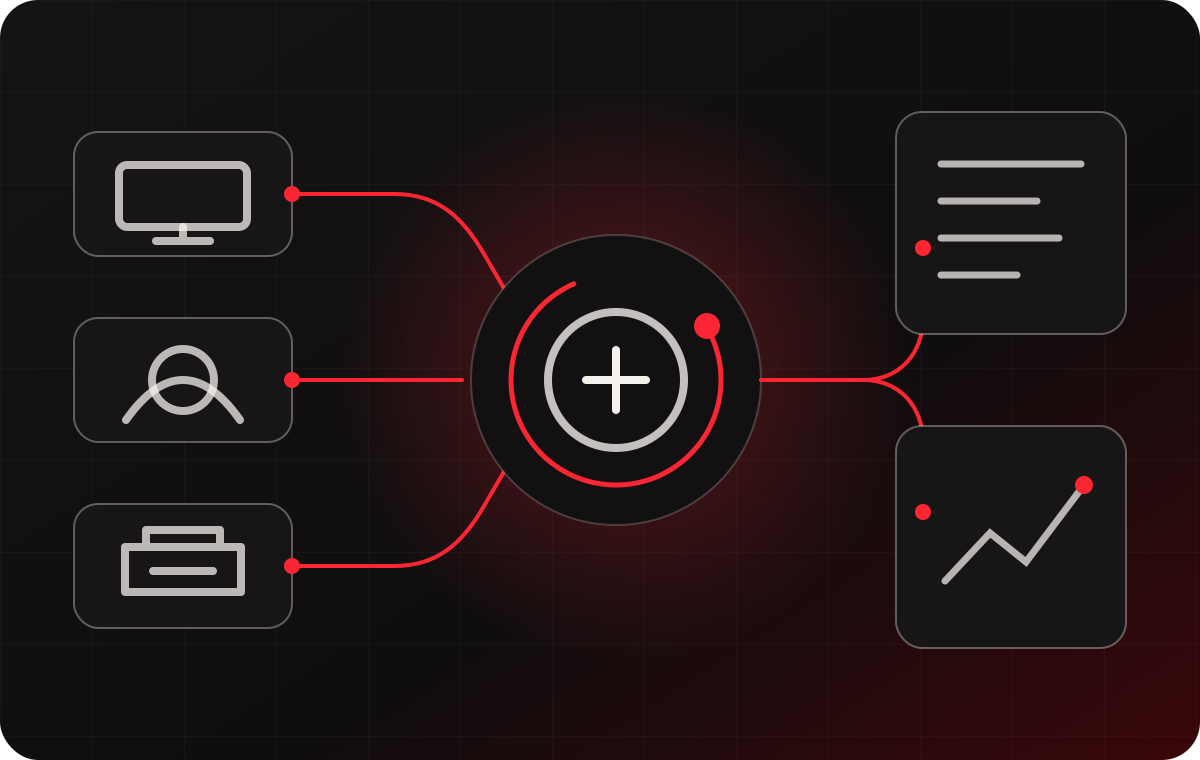
Which systems and components support the organization?
ICT REGISTER · CRYPTOGRAPHIC INVENTORY · CBOM
See cryptography. Understand risk. Prove controlled change.
SYNRION connects assets, applications, certificates, keys and trust relationships in one current operating view. This creates traceable technical evidence for DORA, NIS2, PCI DSS and BSI-oriented controls without replacing the organization’s formal compliance assessment.
THE OPERATING CONTEXT
An inventory lists objects. It does not yet explain their operational impact.
Teams often maintain ICT assets, certificates, keys, applications, suppliers and evidence in separate systems. That makes simple questions difficult: Where is cryptography used? Which service depends on it? Does it meet policy? Who owns the decision? SYNRION correlates this technical and organizational context so that deviations and required action become visible.
A current and traceable view of assets, cryptography and controlled change.
CLEAR TERMS
Four terms answer four different questions.
The terms are often used together, but they describe different inventories and responsibilities. SYNRION connects their technical evidence without blurring their meaning.
A CBOM shows which cryptography exists. SYNRION shows where it is used, whether it meets policy and how it is changed under control.
Which contractual ICT third-party arrangements exist?
DORA Register of Information
Which algorithms, keys, certificates and trust relationships are in use?
Cryptographic inventory / crypto register
How can cryptographic components be exchanged in machine-readable form?
CBOM
A CONTROLLABLE RESULT
Turn inventory data into decisions and evidence.
The useful result is not another static list. It is a current relationship model that connects technical state, responsibility and controlled action.
Current inventory
Assets, applications, certificates, keys, algorithms and trust chains remain connected to their observed state.
Operational context
Bindings, owners, dependencies and business relevance explain where cryptographic objects are actually used.
Controlled remediation
Policy deviations lead to traceable renewal, replacement, migration or documented exception handling.
Evidence on demand
Dashboards, reports and API exports make current state and completed change retrievable without rebuilding the story for every audit.
THE APPROACH
Five steps keep the evidence connected to reality.
Discovery only becomes useful when every observation can be correlated, assessed, changed and verified again.
- 01
Discover
Collect reachable assets, identities, certificates, keys, algorithms and trust relationships from connected sources.
- 02
Correlate
Connect technical objects to endpoints, applications, directories, owners and dependent services.
- 03
Assess
Compare observed state with policy, security baselines, expiry, exposure and the organization’s defined scope.
- 04
Control
Use SYNRION x.BIND workflows to renew, replace or rebind cryptographic services in a controlled way.
- 05
Prove
Verify the new state continuously and provide current dashboards, reports and machine-readable exports.
FRAMEWORKS & RESPONSIBILITY
Technical evidence for concrete regulatory contexts.
SYNRION supports the data, controls and traceability that responsible teams need. Compliance itself remains an organizational and, where applicable, assessor decision.
DORA
Connect ICT-supported functions, assets, dependencies and technical state so that risk decisions are based on current evidence.
NIS2
Support risk-management evidence with visible cryptographic state, deviations, ownership and completed treatment.
PCI DSS
Reveal certificates, keys, systems and dependencies that may affect cardholder-data scope, and highlight baseline deviations.
BSI cryptographic guidance
Support a current Krypto-Kataster, X.509 security baselines and traceable remediation of policy deviations.
THE RIGHT FIT
For teams that must explain both cryptography and responsibility.
The model supports security, PKI, infrastructure, risk and audit teams when evidence spans many systems and owners.
ICT risk and DORA
Relate ICT-supported functions, assets, dependencies and technical state while keeping the separate third-party Register of Information distinct.
NIS2 and BSI controls
Make cryptographic policy, inventory, deviations and implemented risk treatment easier to understand and demonstrate.
PCI DSS scoping
Identify technical scope candidates, dependencies and inconsistencies that the responsible organization and assessor can evaluate.
Crypto agility
Find affected services, automate controlled change and verify convergence before an algorithm or policy deadline becomes operational risk.
THE NEXT CONTROLLED STEP
Start with the evidence question that is hardest to answer today.
We map the relevant assets, cryptography, scope and responsibility, then define a focused first implementation step.